
Audience: hear the kingdom before you rule it
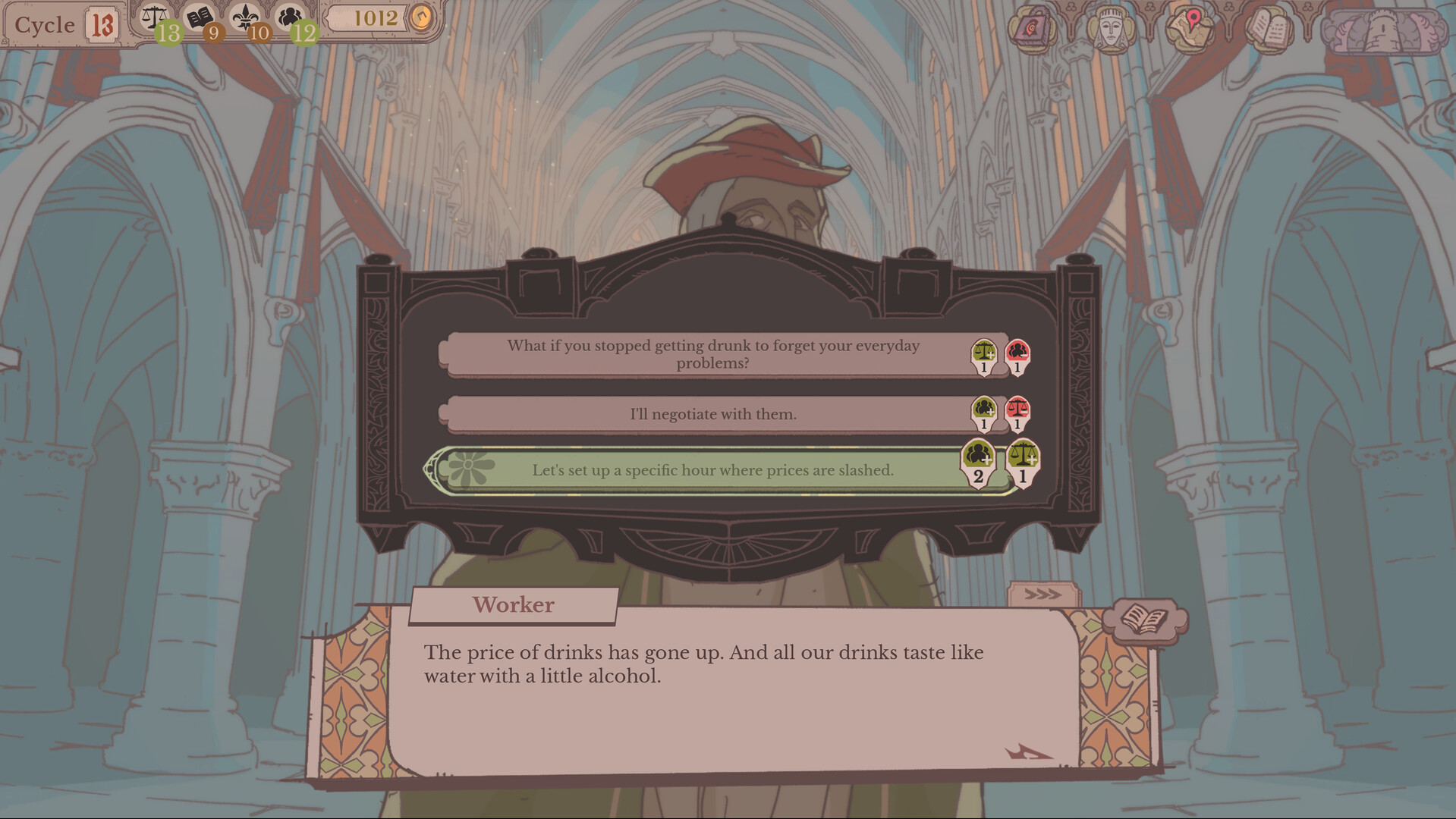
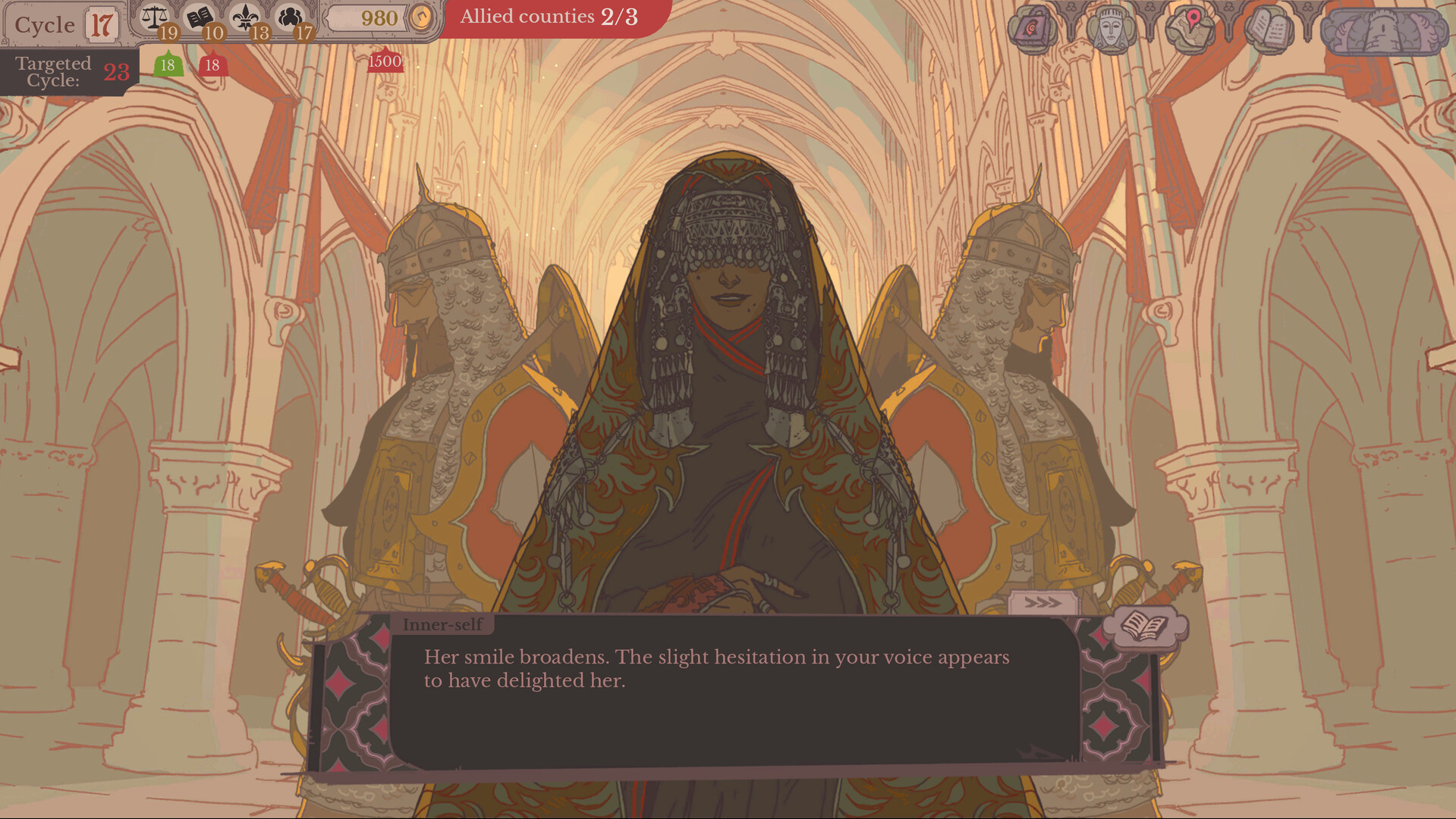
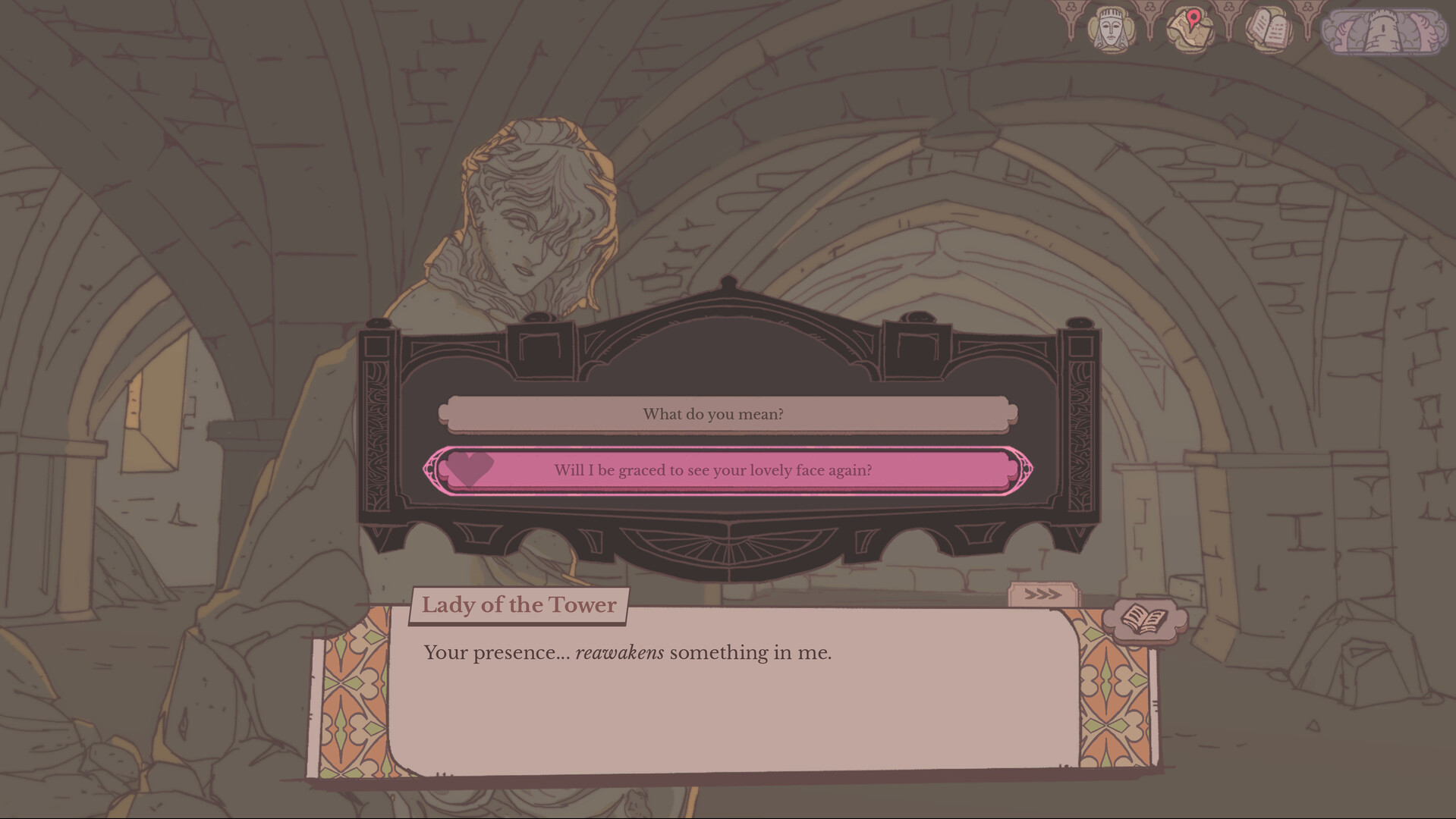
Audiences are the daily entry point described by the official product copy. Subjects arrive with a problem, and the ruler chooses a response rather than simply selecting a target and watching a combat result. Those responses can affect individual relationships, collective affinities, and kingdom resources. The decision interface therefore belongs beside the prose, not behind a generic tips card: it shows that the player is balancing the story’s voices against the practical state of the kingdom. The five-system tabs on this page keep Audience separate from the later quest and annex decisions.
The named groups are Merchants, Mystics, Scholars, Nobles, People, and Treasury. They establish the vocabulary for reading the audience screens and the consequences that follow, but the captured sources do not provide a complete numerical formula for each response. A useful reference can say which groups are tracked and why they matter without pretending to calculate an unseen value. When an interface presents several responses, read it as a choice with a relationship and resource context; the site does not attach an invented percentage to an outcome. The section also helps returning players identify where the visible audience choice sits in the broader cycle. It is a reading guide for the released interface and its recorded terms, rather than a replacement for the choices made inside the Tower.
Affinities: six named pressures
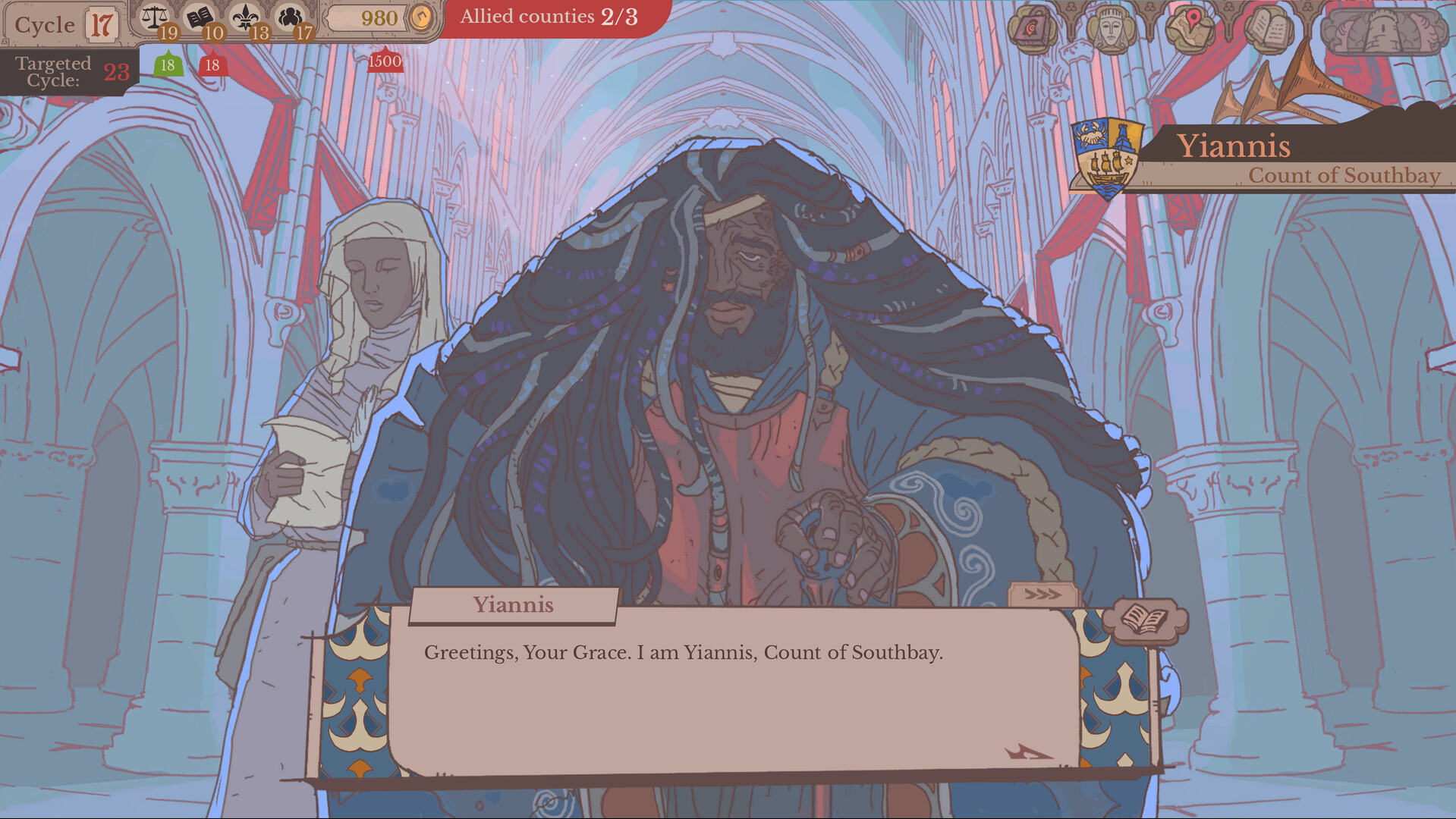
The game’s affinity language is unusually helpful for understanding what a ruling decision is trying to balance. Merchants, Mystics, Scholars, Nobles, People, and Treasury are named in the first-party descriptions, giving each audience result a social or material context. A petition may feel personal on the surface, but the management layer asks what the answer does to a group, a resource, or the relationship that connects them. The screenshots show the interface vocabulary; they are not used to infer hidden thresholds.
The safest way to use these categories is comparative. If a player is reviewing an audience, the visible response choices can be considered against the groups named by the game. If the player is returning to an earlier moment, the same decision can be reconsidered with knowledge of a different path. No full affinity table or complete set of change values is part of the sealed record, so this section describes the six tracked names and the role they play in the documented loop rather than making a calculator out of partial evidence.
Round Table: match five Knight attributes
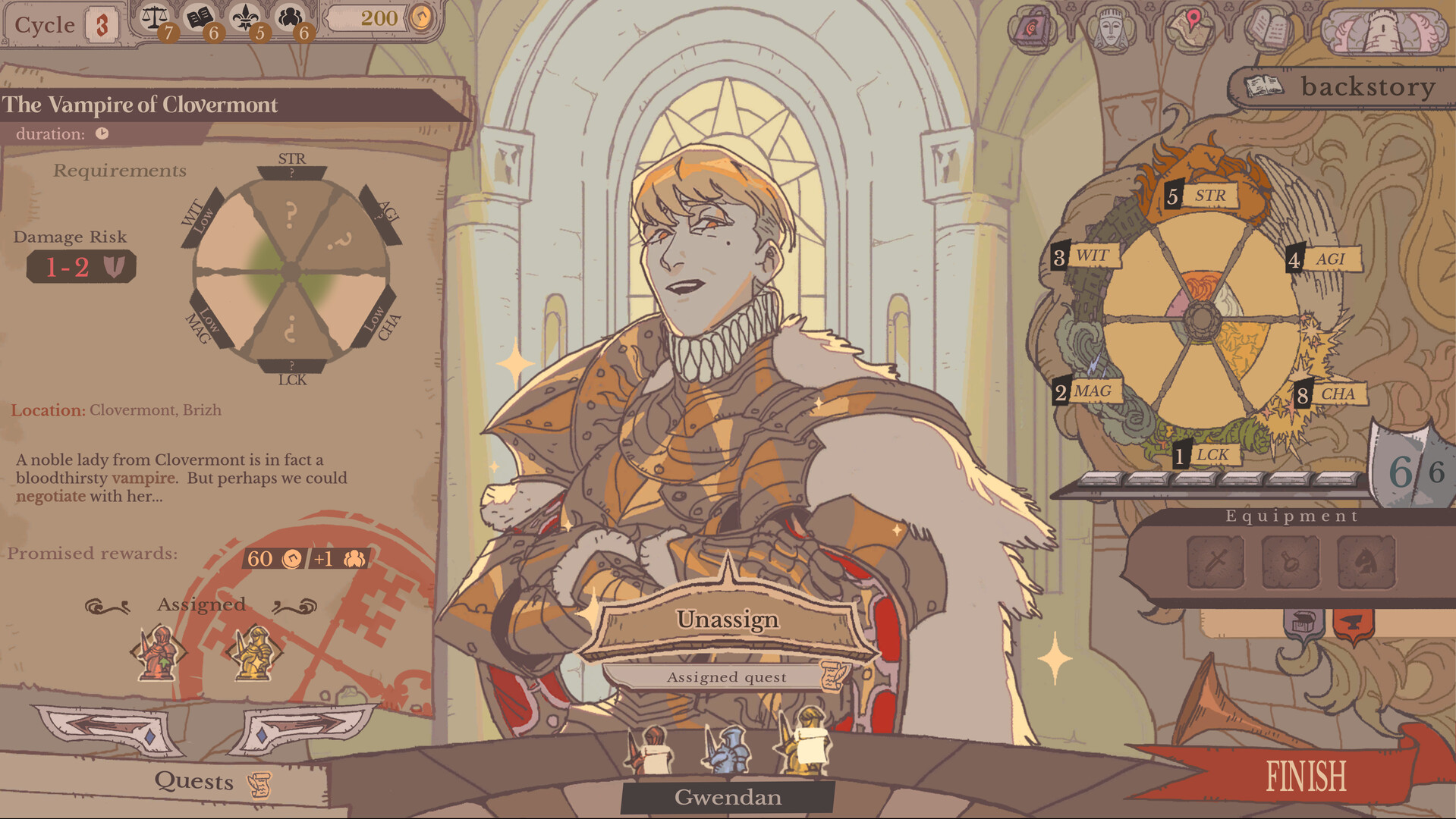
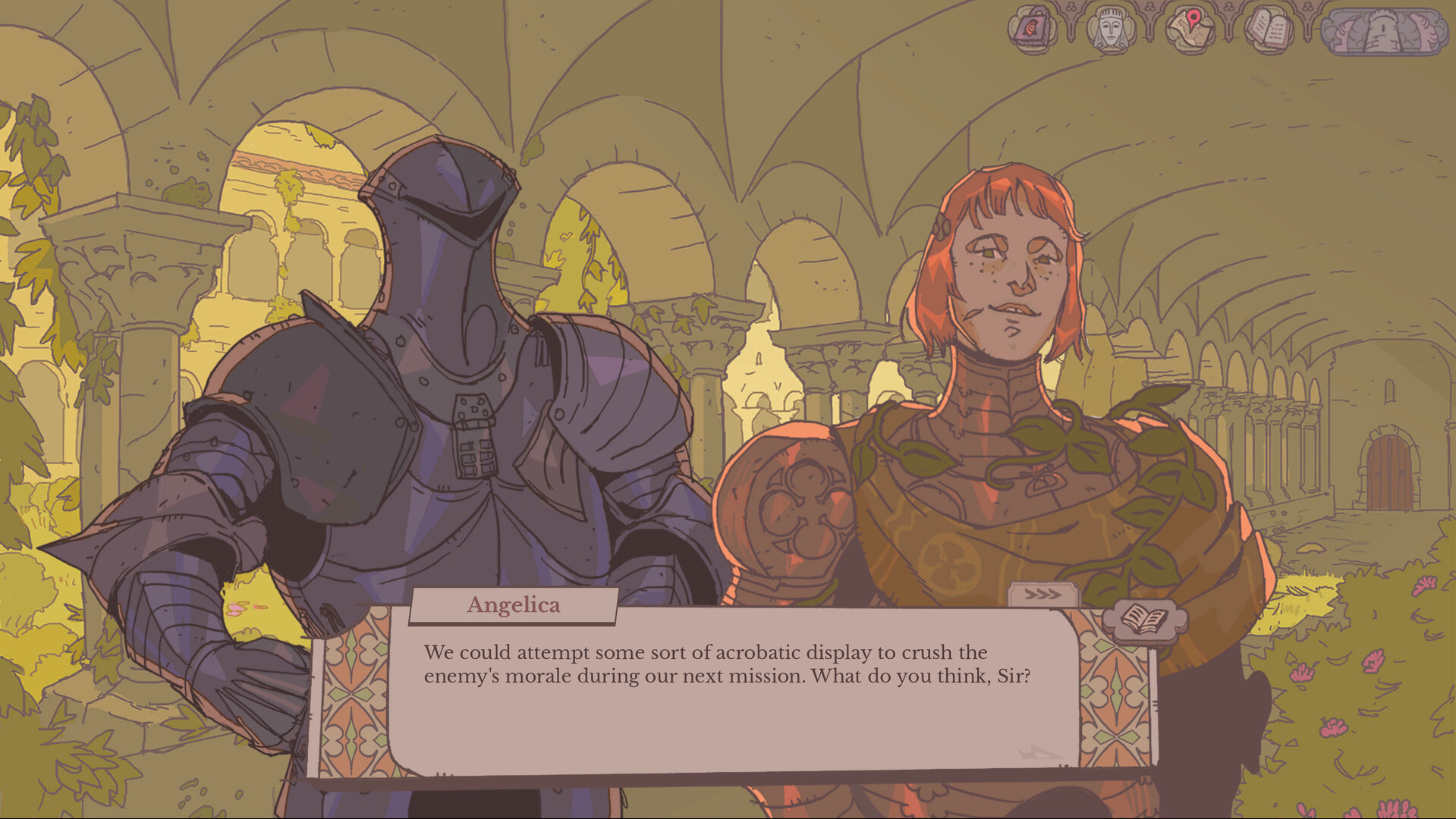
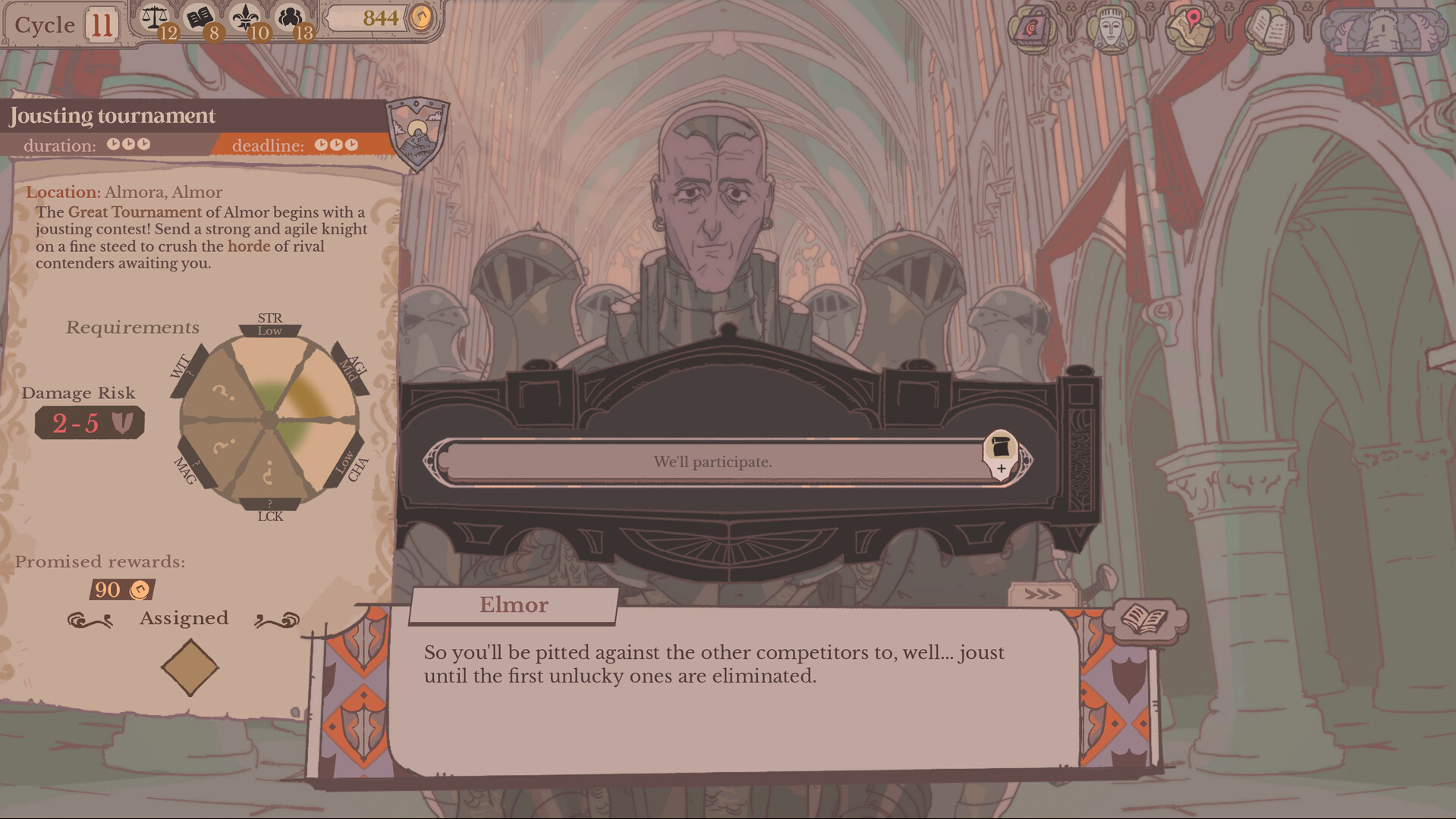
Quest assignment turns the Round Table into a selection screen. The official material names Strength, Agility, Charisma, Magic, and Wit as Knight attributes, and the captured assignment interfaces show requirements and party slots. The player’s task is to compare a documented candidate against those named attributes and the quest brief, then read the result after the party returns. The possible debrief labels are Critical Failure, Critical Success, and Unexpected Outcome. They communicate the range of the system without requiring a fabricated probability chart.
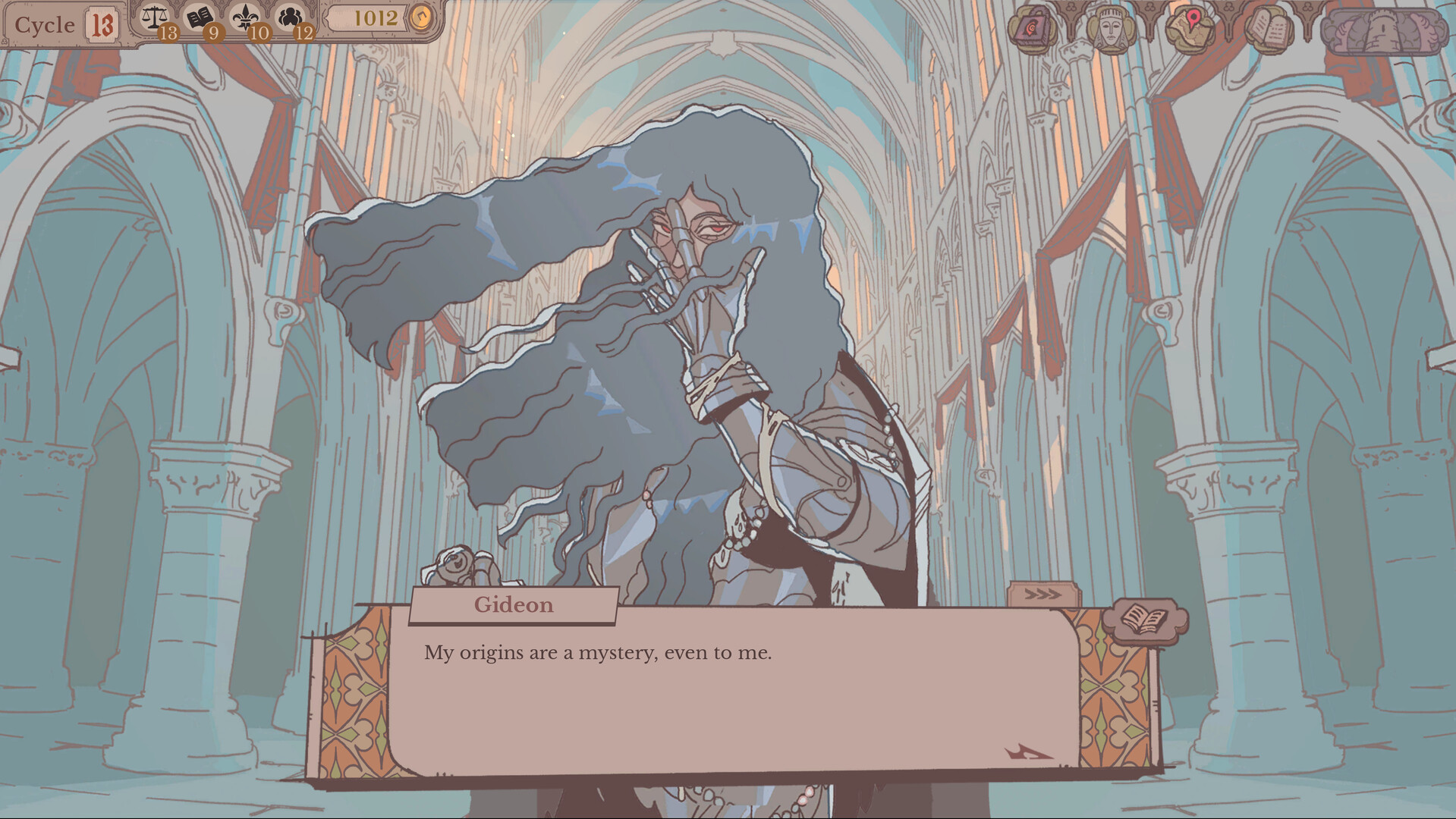
This page does not expand the 16 profile records into stat sheets. The research contains role, origin, and official description for those profiles, but no complete stat table. A roster selector on the court floor is therefore the accurate companion to this overview. Use the gallery to inspect the quest assignment and debrief interfaces, then use the profile collection to understand who has been documented. The two pages meet at the same court concept while preserving the boundary between visible system facts and unavailable numbers. Keeping the roster and assignment views connected gives the player a clear path from a court profile to the quest screen and back again. The documented attributes are enough to explain the interface language without inventing hidden rules.
Annexes: rooms that extend the Tower
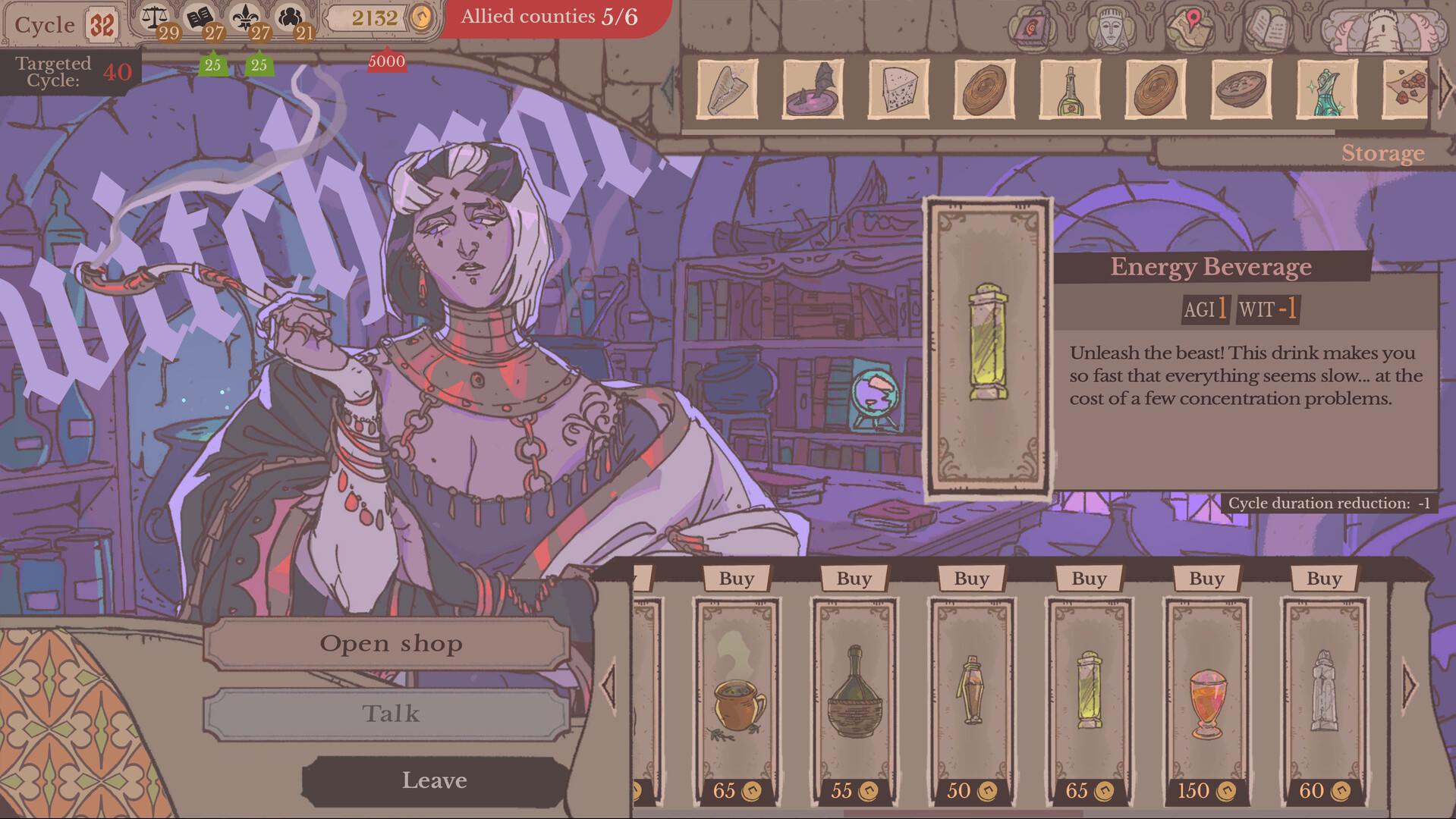
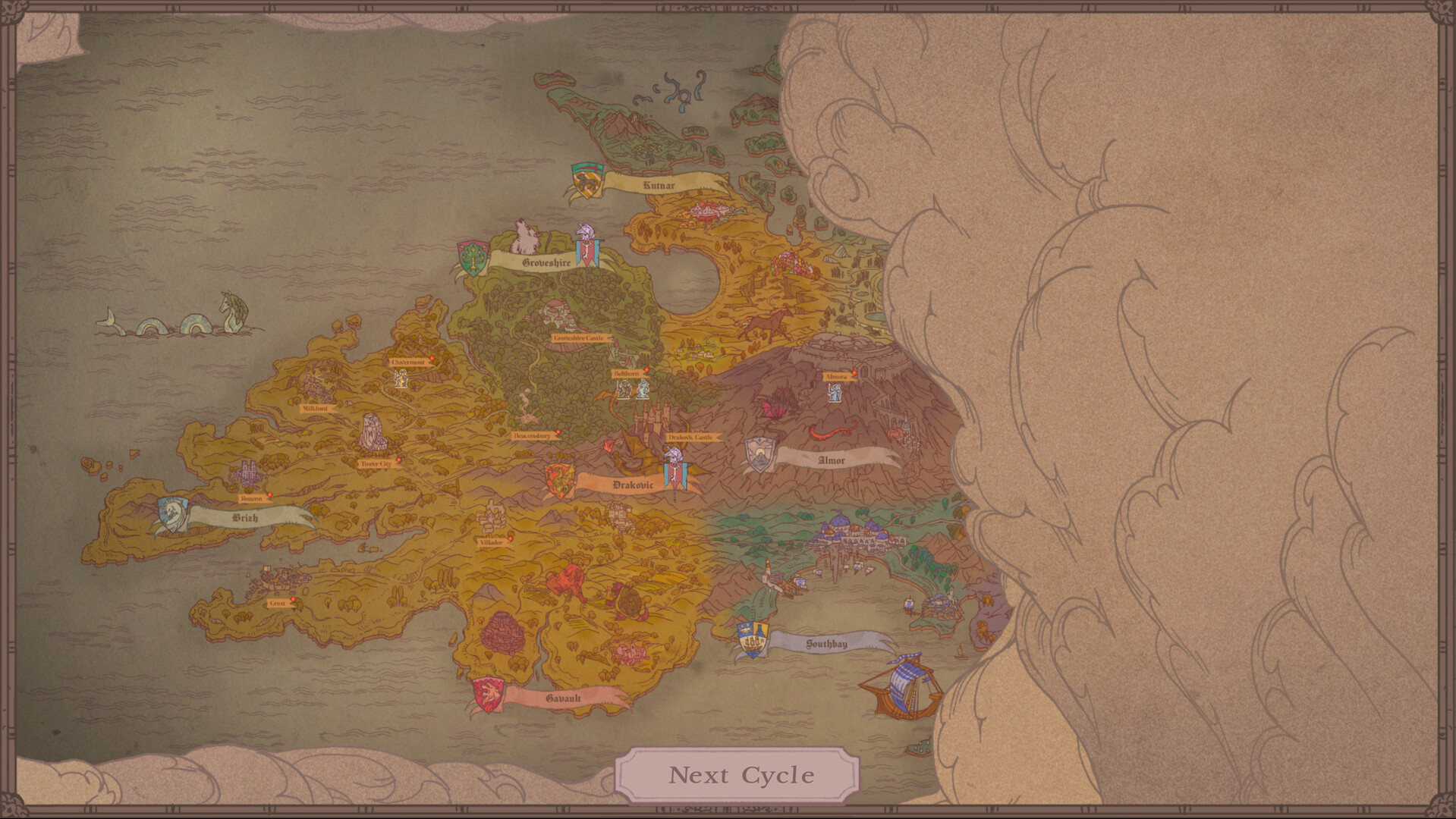
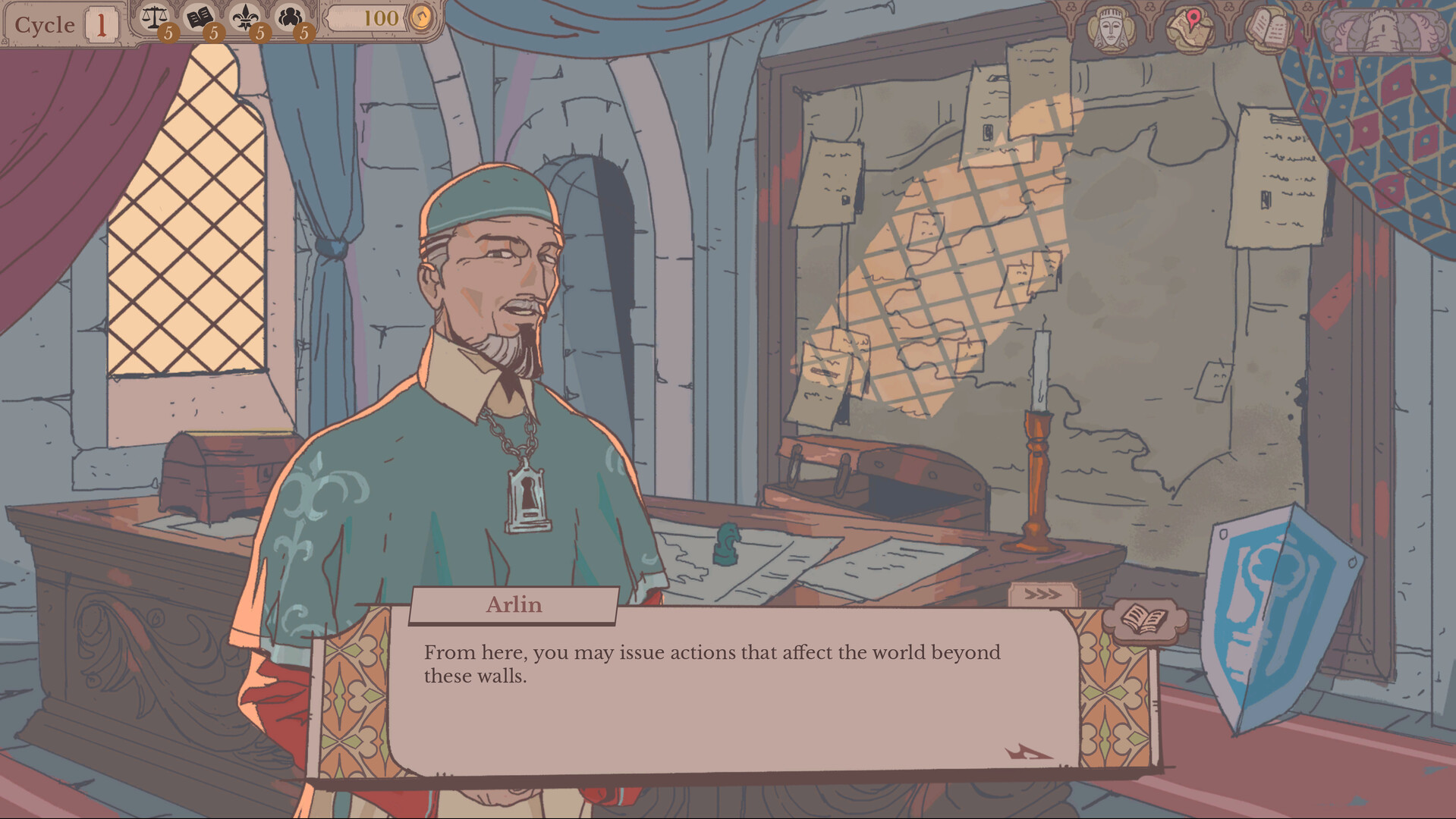
Tower annexes expand what the sovereign can do. First-party descriptions connect them with abilities, servants, crafting, equipment, and other court functions. That makes an annex a management surface rather than a decorative room list: it is where the Tower becomes a place for ongoing work, not only the background to an audience. The interface screenshots include the surrounding world and map language that helps the player place these functions inside the larger kingdom.
The research does not provide a complete upgrade formula or every annex level. The page keeps that limitation out of the player-facing presentation by describing the functions that are actually named and by avoiding upgrade costs, unlock orders, and efficiency claims. When a player wants to compare the systems, the tabs above isolate Annexes from Audience, Affinities, Round Table, and Rewind. That structure answers the practical question—what does this part of the Tower represent?—without filling missing data with a conventional database pattern.
Rewind: change the path, keep the knowledge
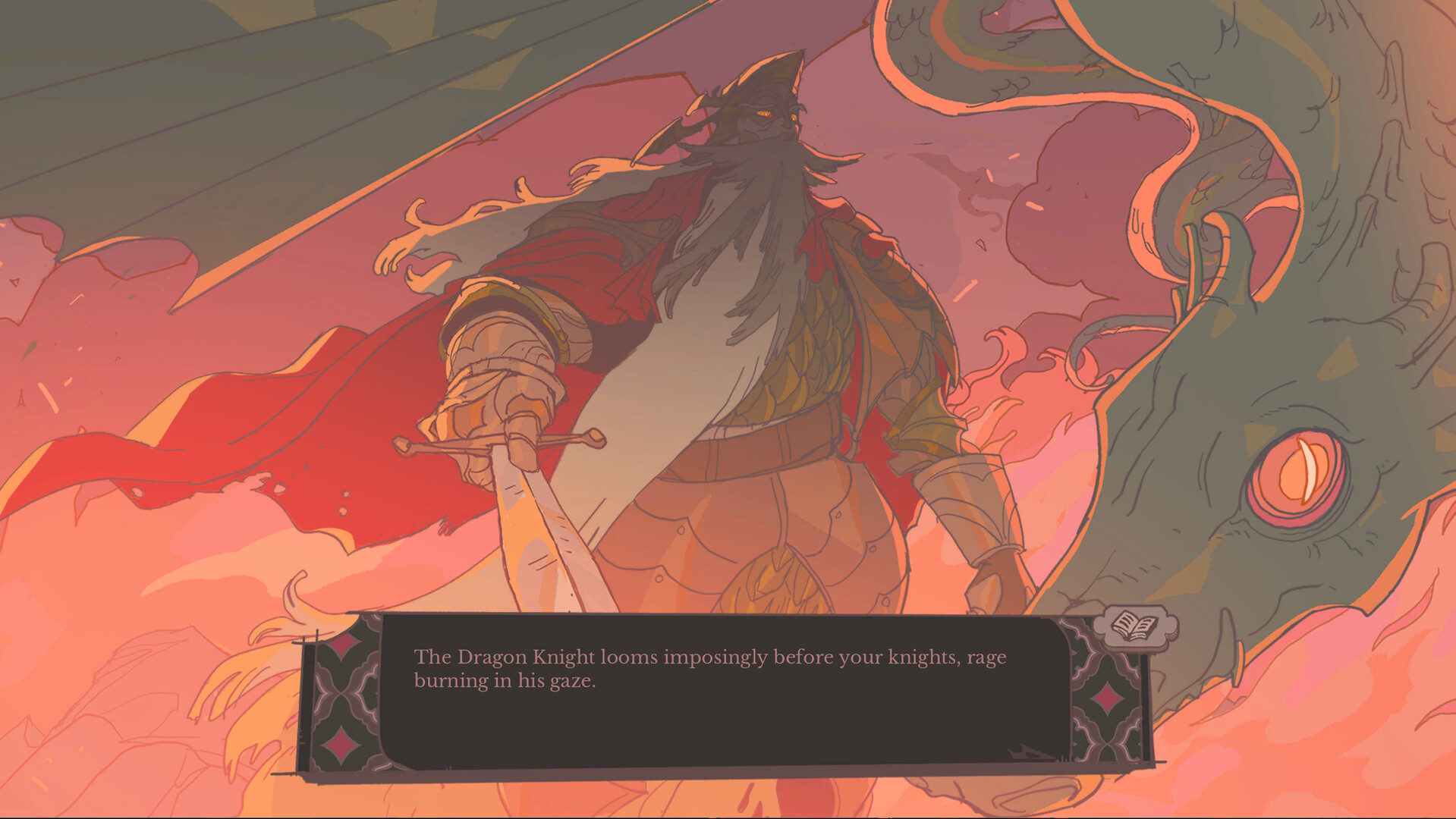
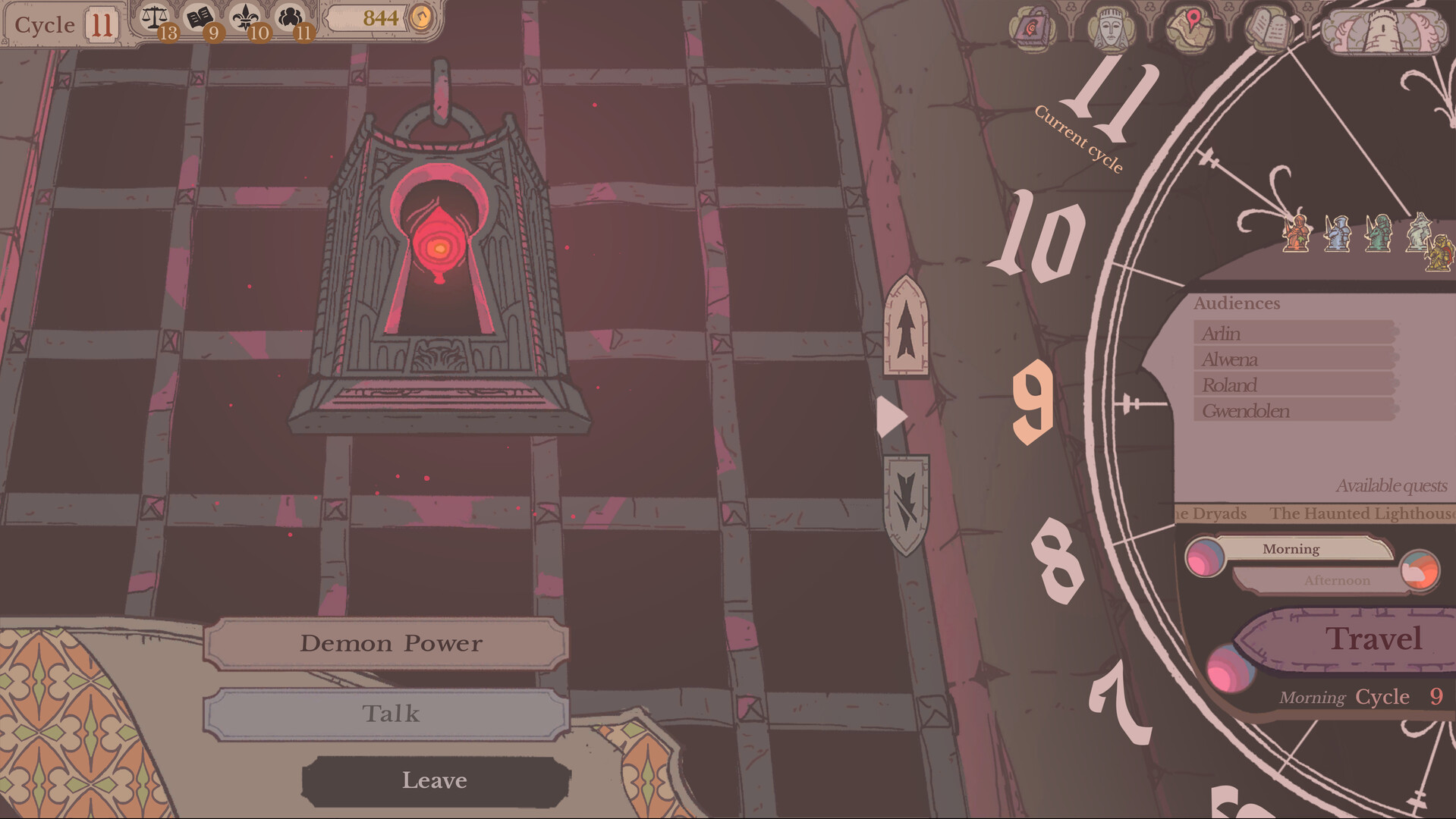
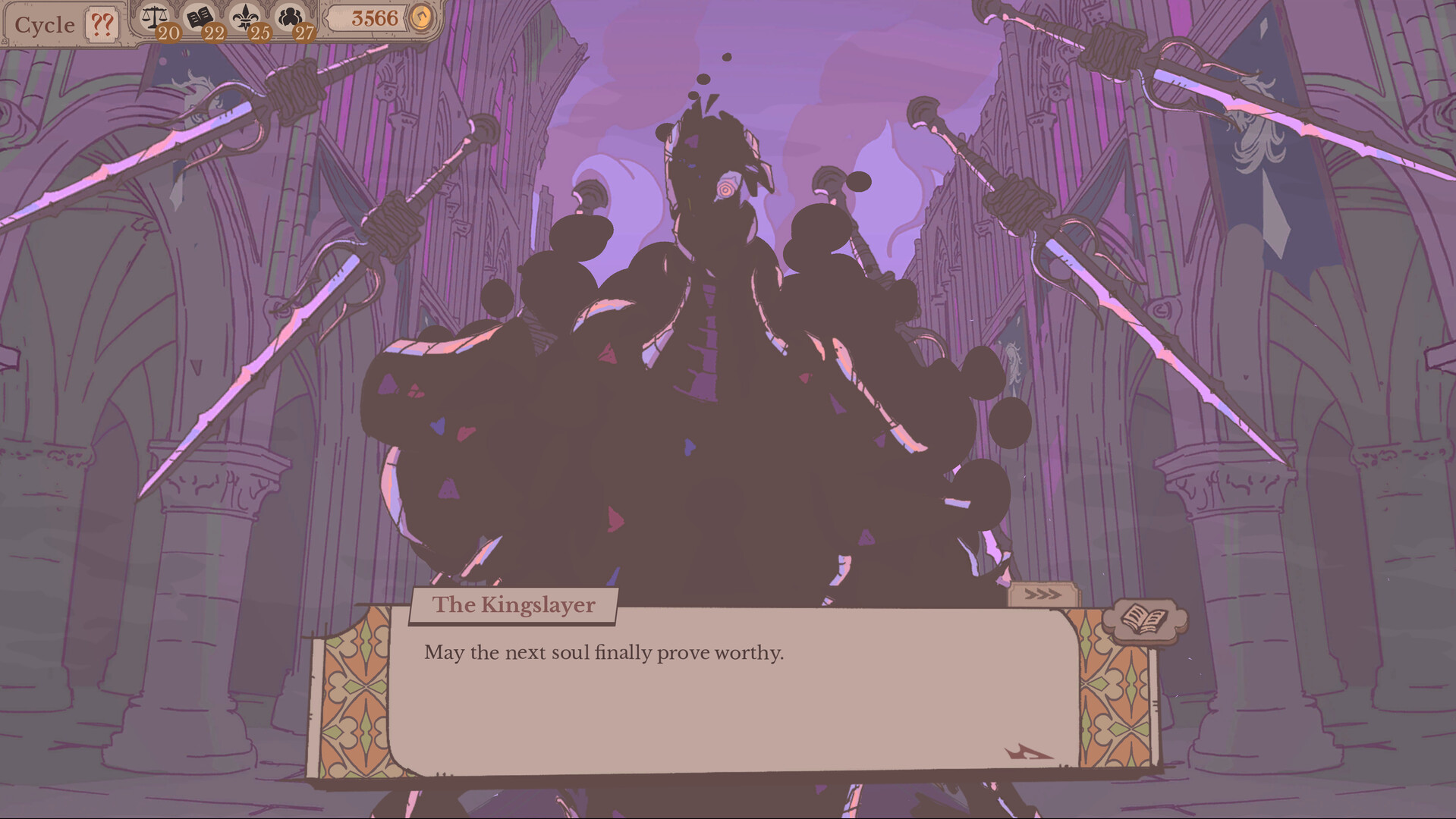
The Demon in the Crypts provides the game’s time-rewind idea. First-party descriptions say that time can be turned back while learned knowledge opens alternate choices and pathways. In player terms, the value of returning is not simply erasing a mistake; it is bringing what the ruler has learned into a new attempt. That is why the official Demon Power screen and the cycle clock lead the site’s visual language. The center of the cycle marks knowledge surviving the turn.
Rewind also ties the other systems together. A different audience response can change a relationship, a different Round Table selection can change a quest result, and a different annex decision can expose another court function. The reference calls these connections out because they are present in the descriptions and screens, not because it can enumerate every branch. For a current release overview, the honest promise is a documented management loop with alternate paths; the page does not claim a full quest flowchart or hidden route guide. The cycle remains readable because every documented system has a place in the same management loop. Players can move between the pages when they need context for a screen, a character choice, or a recorded release feature.